TradeLens Actionable Insights Dashboard
Founding Product Designer • IBM + Maersk Joint Venture • Enterprise Blockchain Platform
SaaS
Supply Chain
Blockchain
Data Visualization
Design Systems
Reporting
Enterprise Systems
Overview
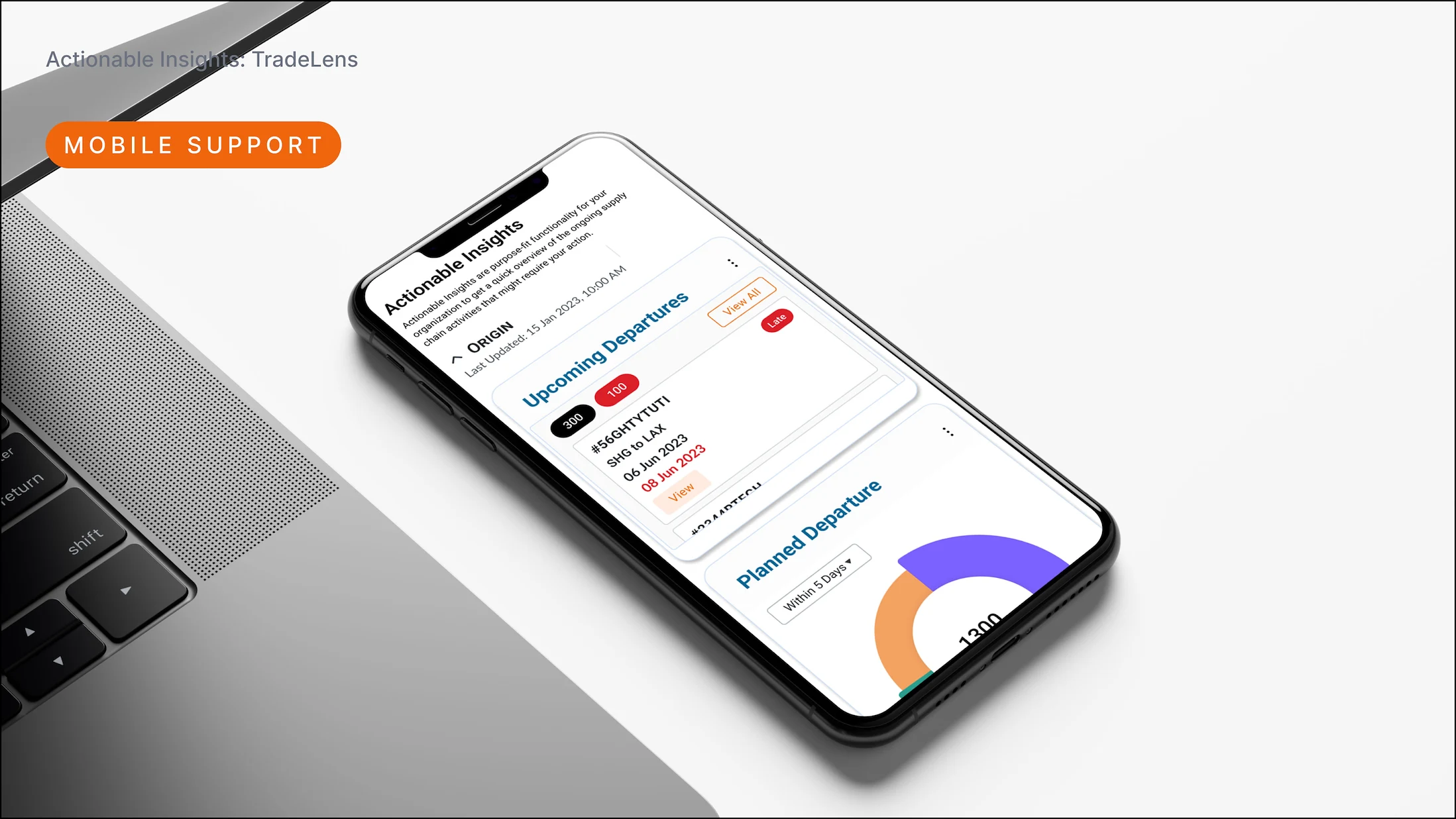
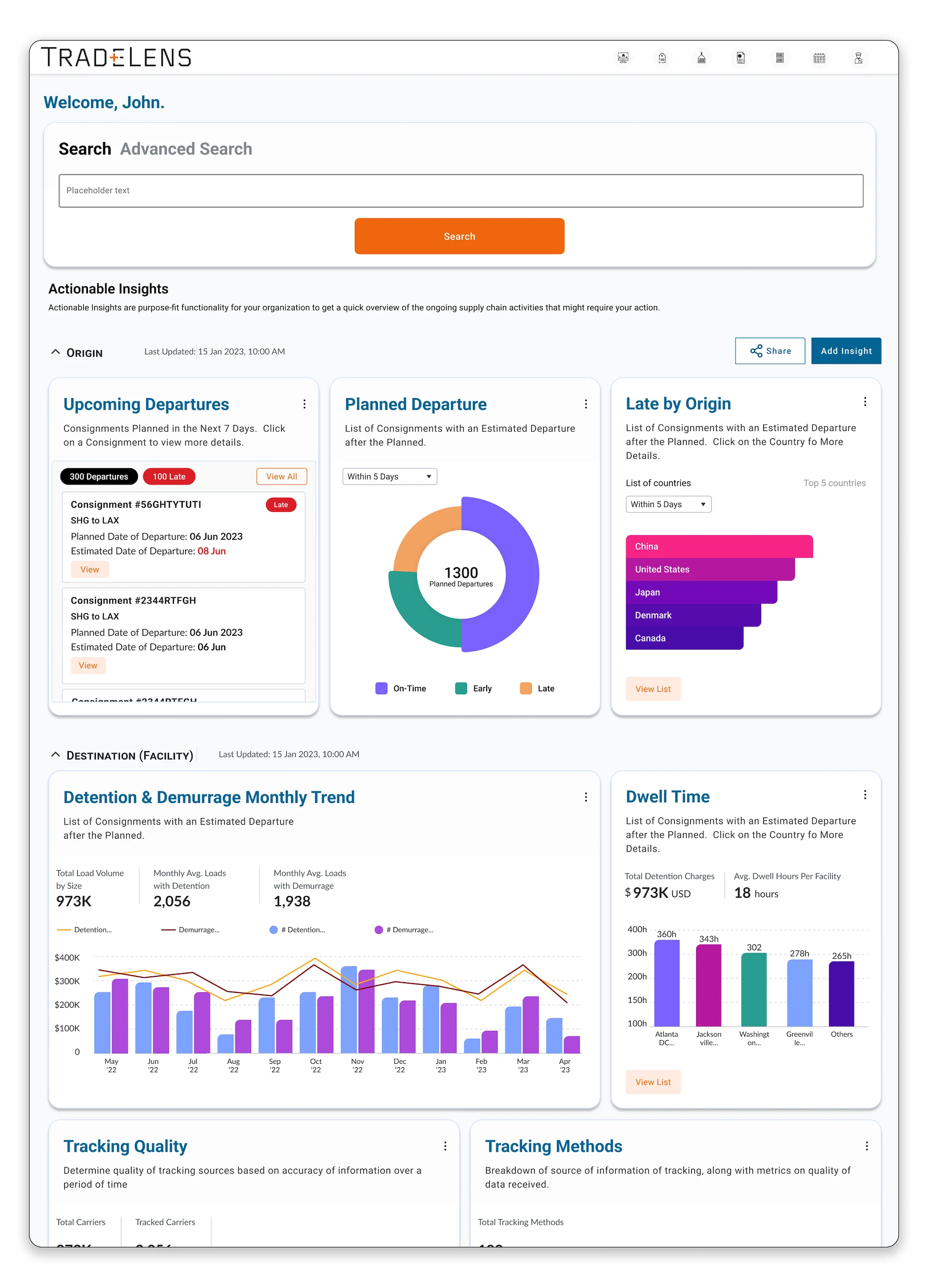
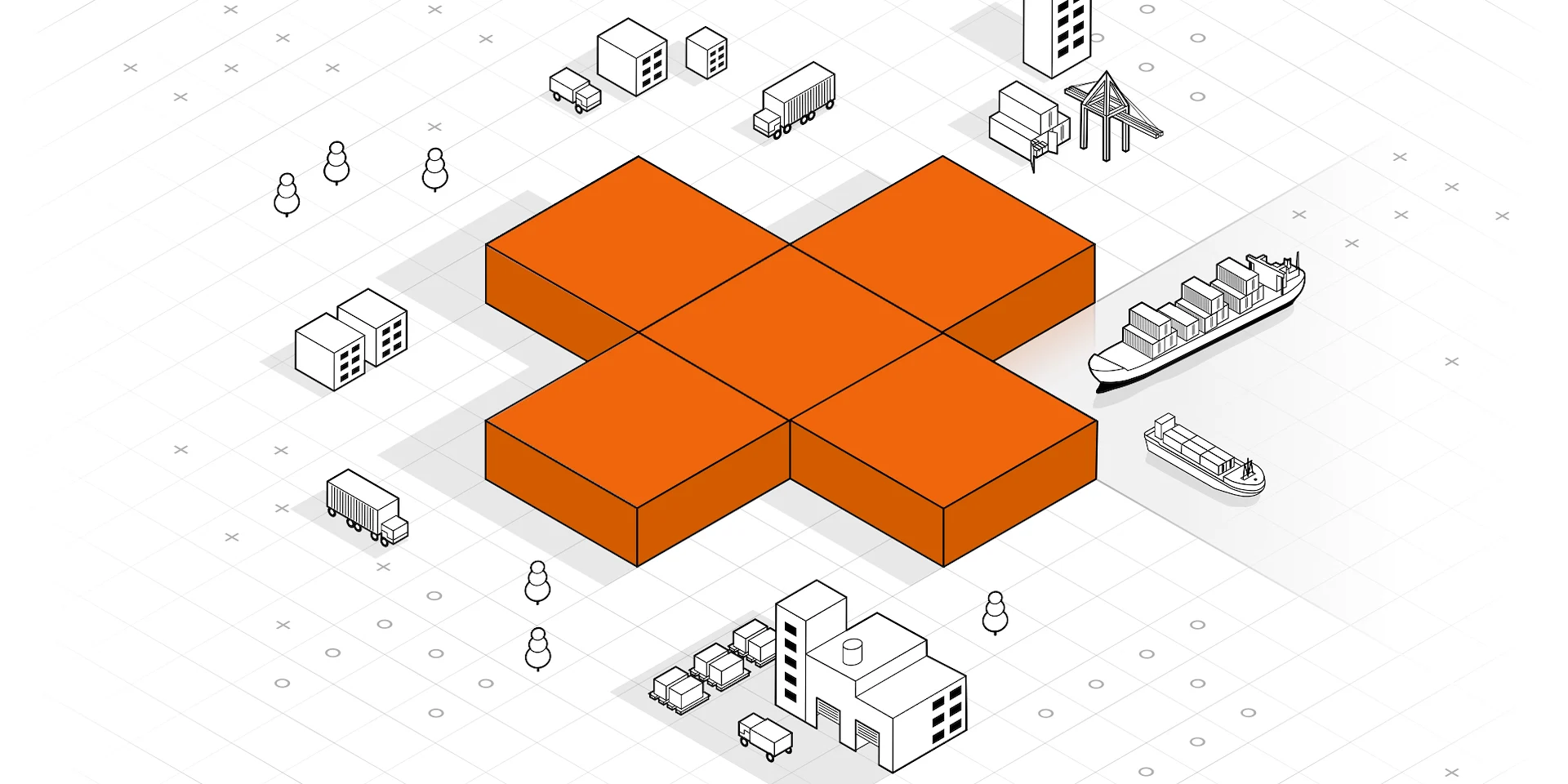
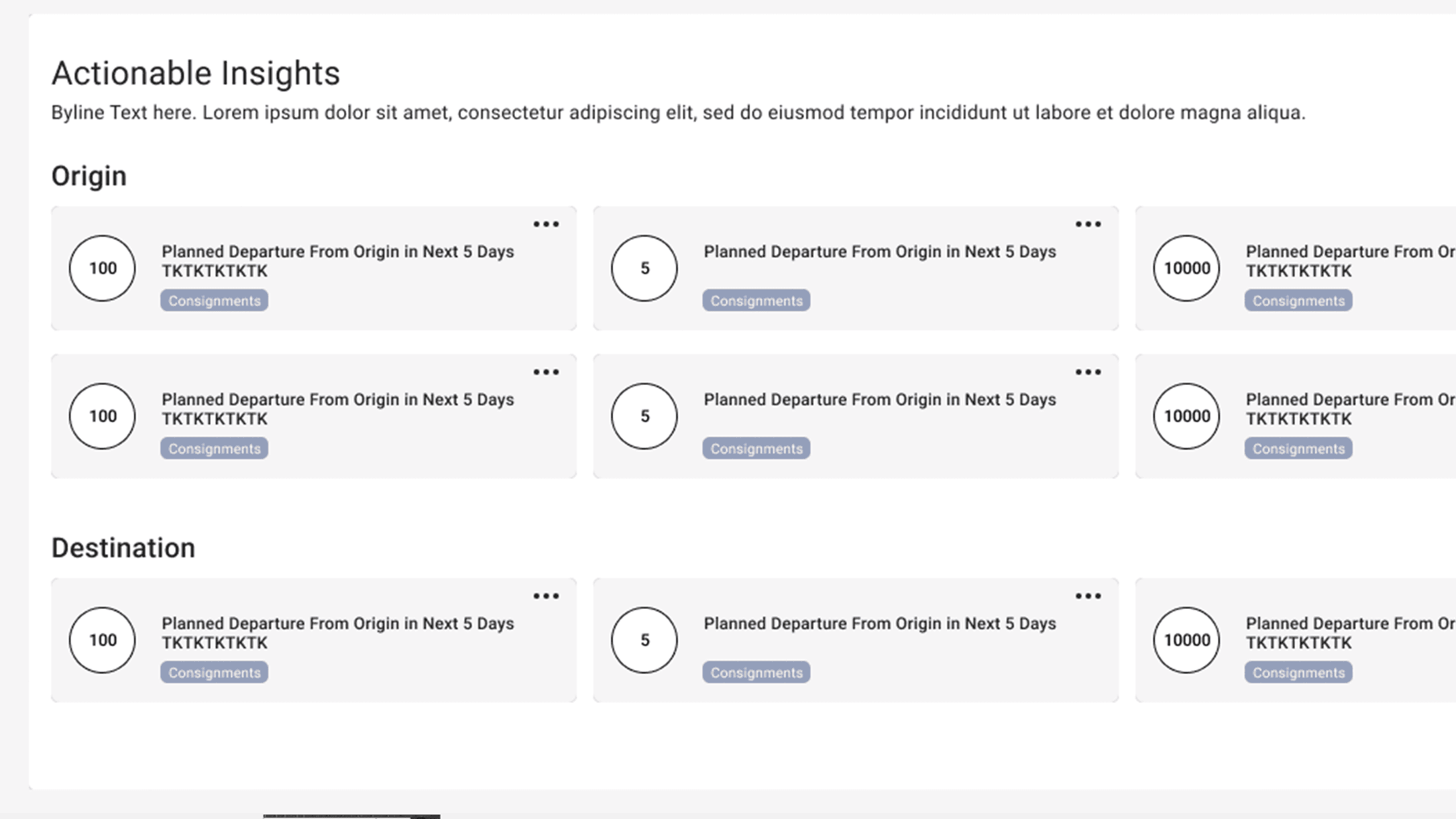
As the founding product designer for TradeLens, IBM and Maersk's global blockchain logistics platform, I led the design of a new executive reporting experience that transformed complex shipment data into actionable operational insights. The goal was to replace fragmented reporting workflows with a role-based analytics platform that helped logistics teams identify issues, monitor performance, and make decisions faster.
Challenge
TradeLens manages millions of data points daily across shipments, containers, and carriers. Users, ranging from logistics coordinators to senior supply chain managers, struggled to interpret this data efficiently. Each user had different priorities, but all needed a way to see what mattered most to their operations.
Our challenge was to design a flexible, role-based reporting experience that surfaced the right insights for each user type. The system needed to be powerful enough for enterprise analytics yet simple enough for day-to-day monitoring and decision-making.
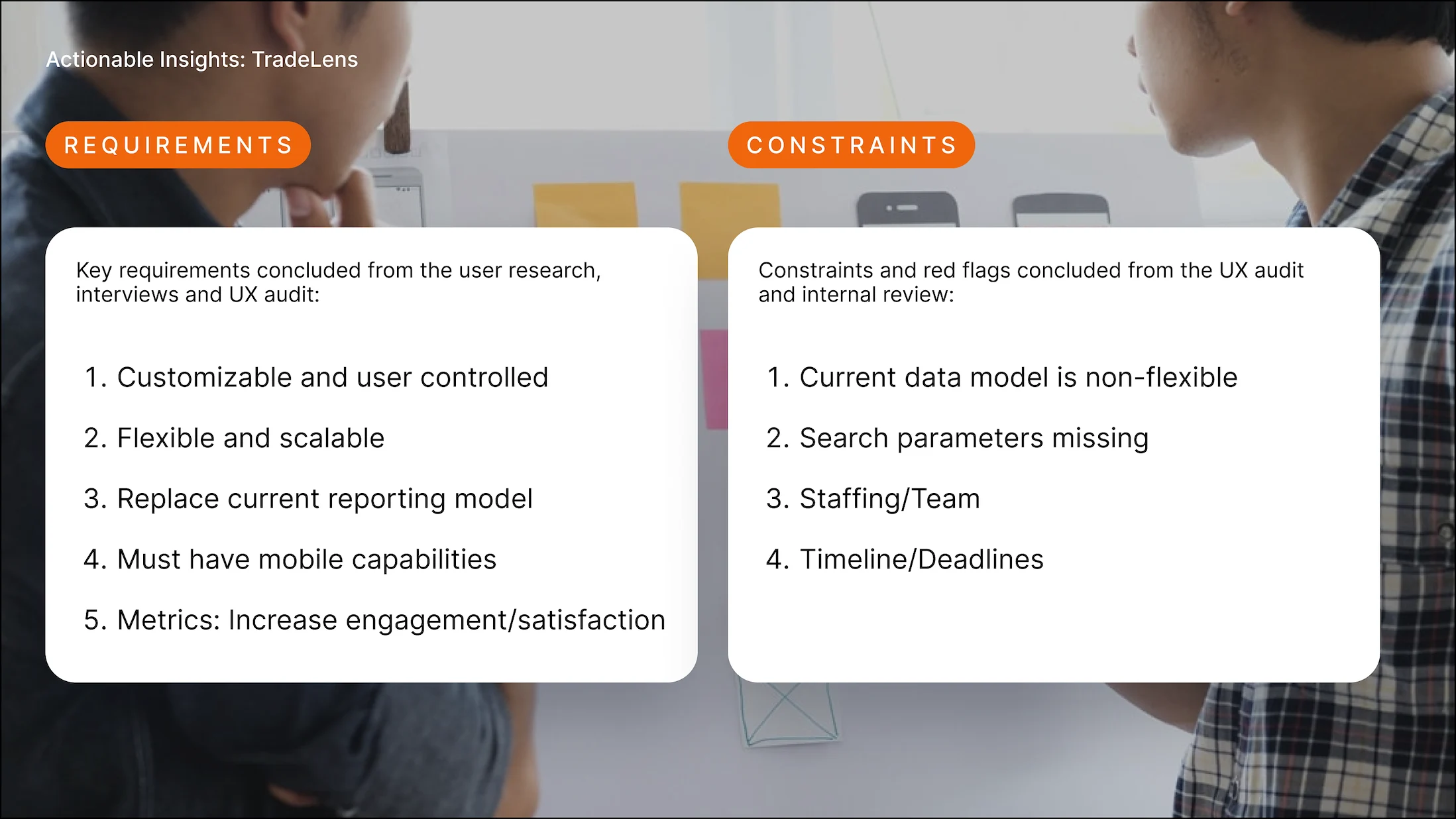
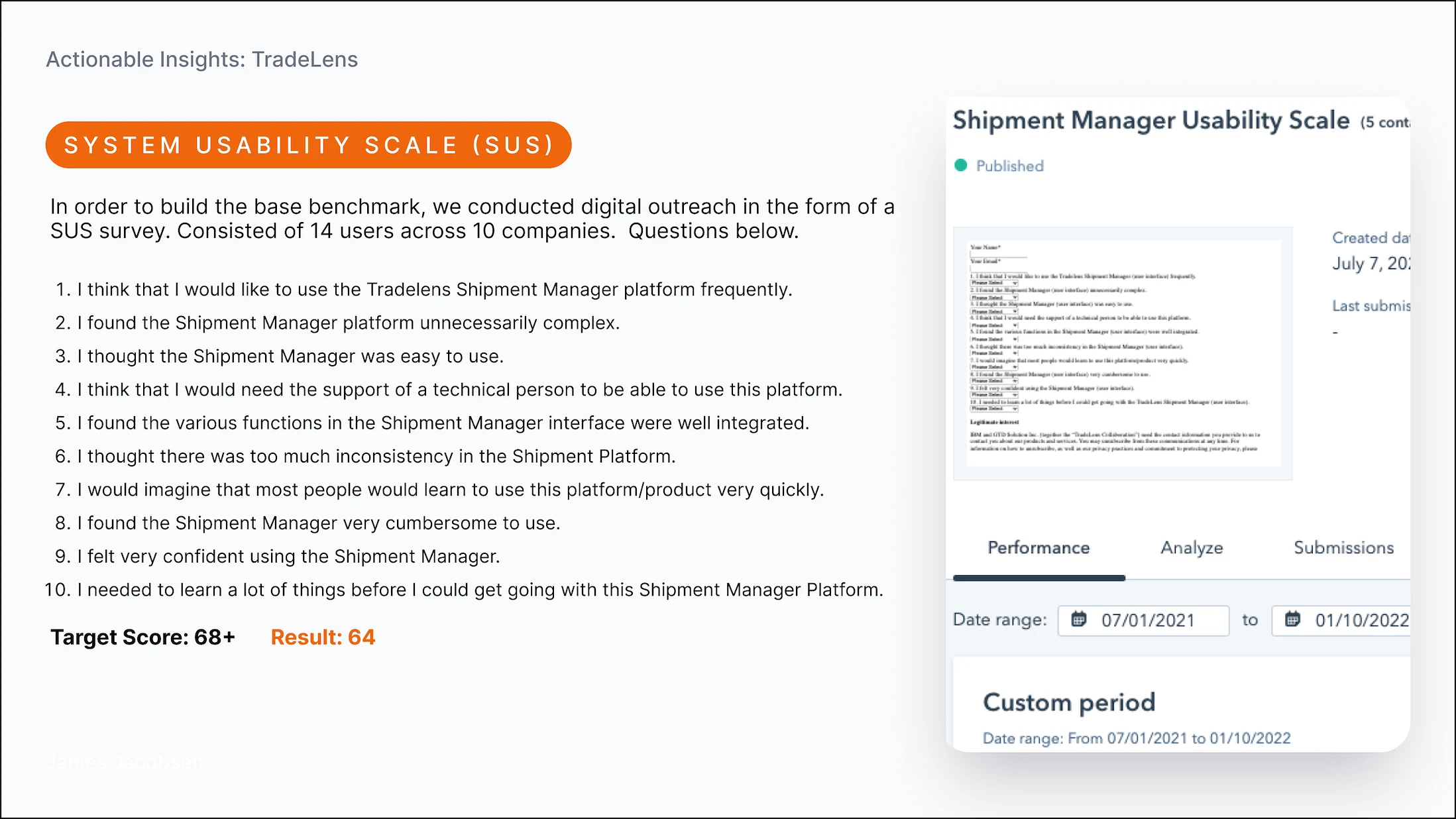
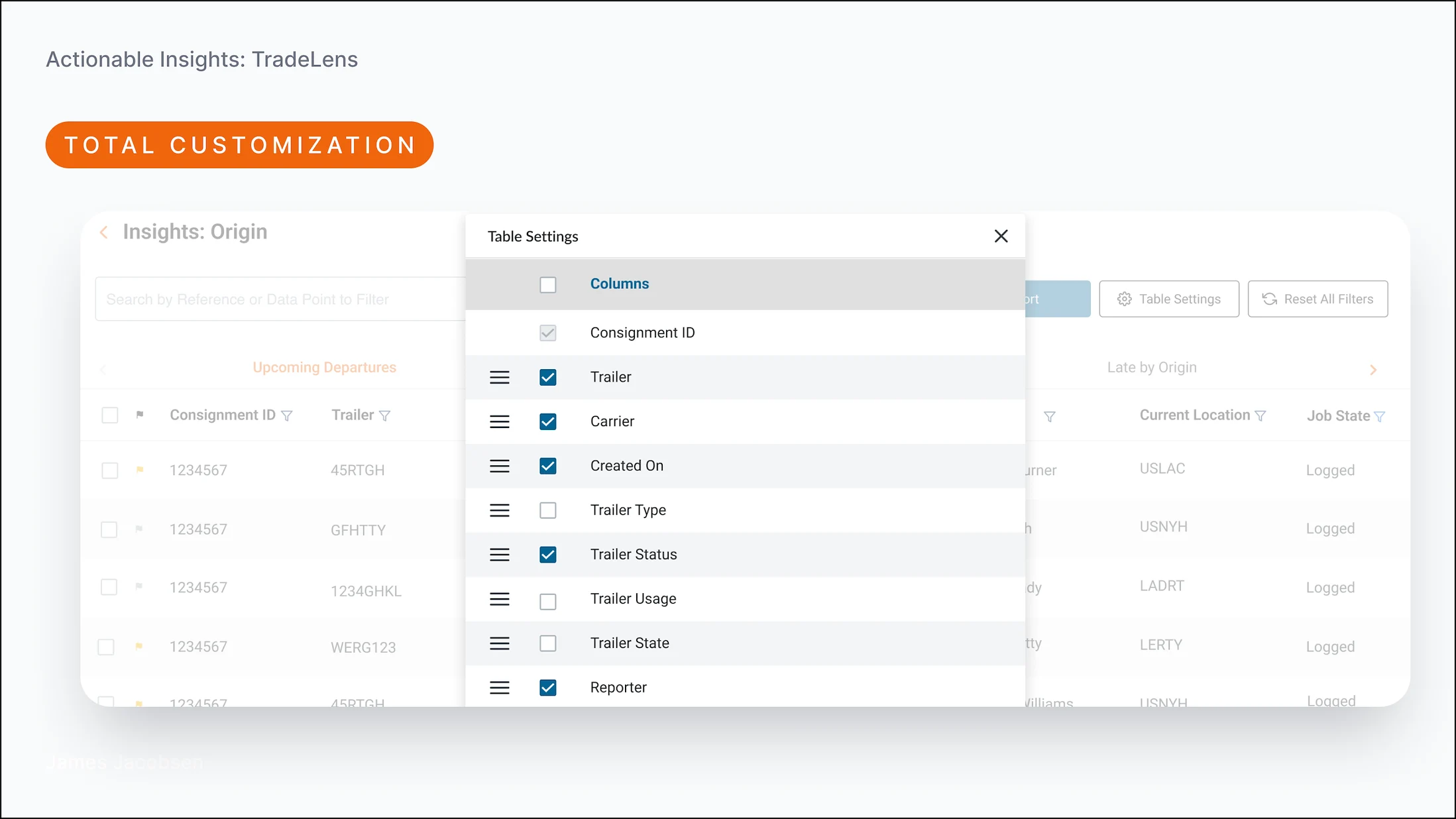
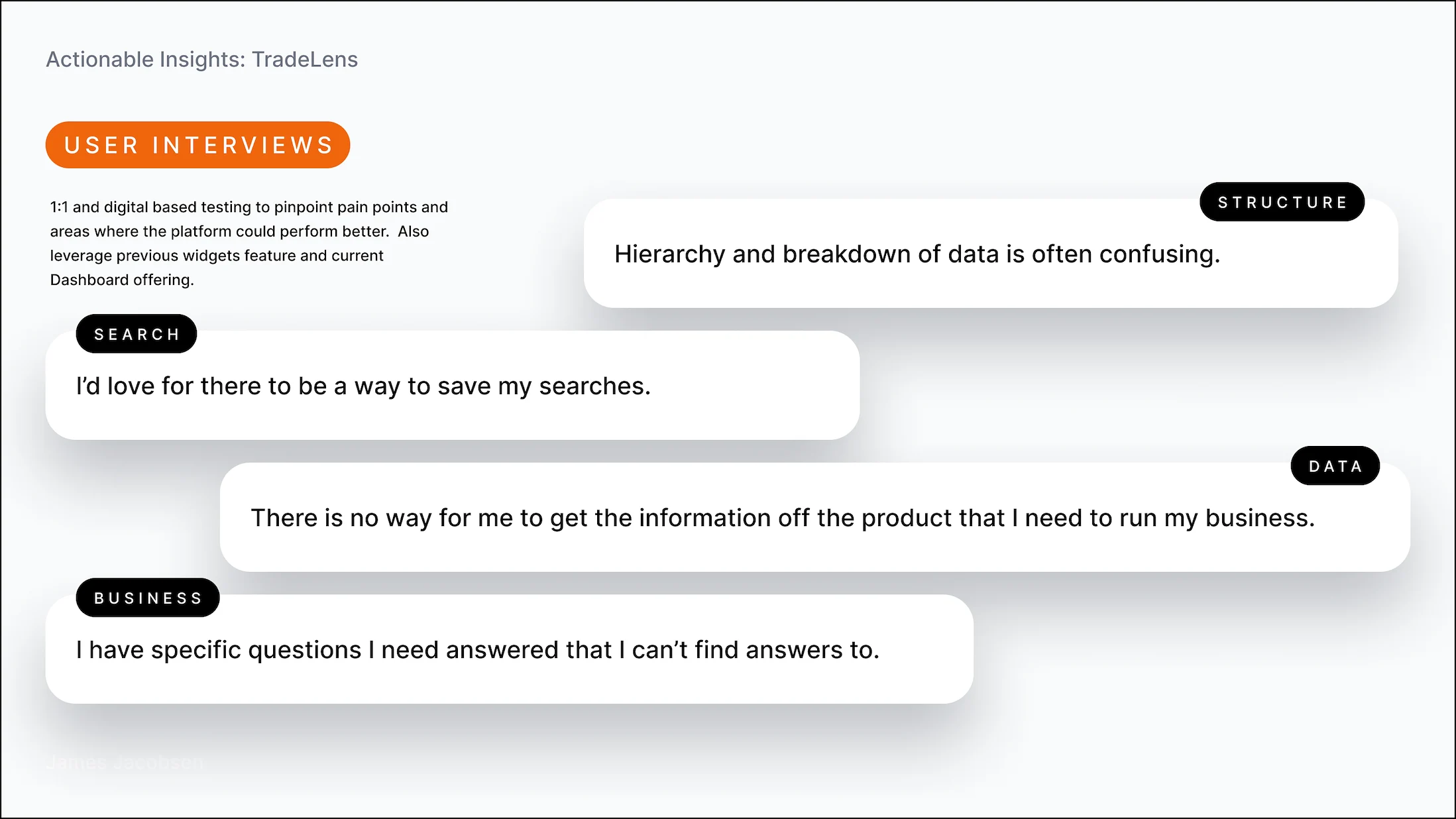
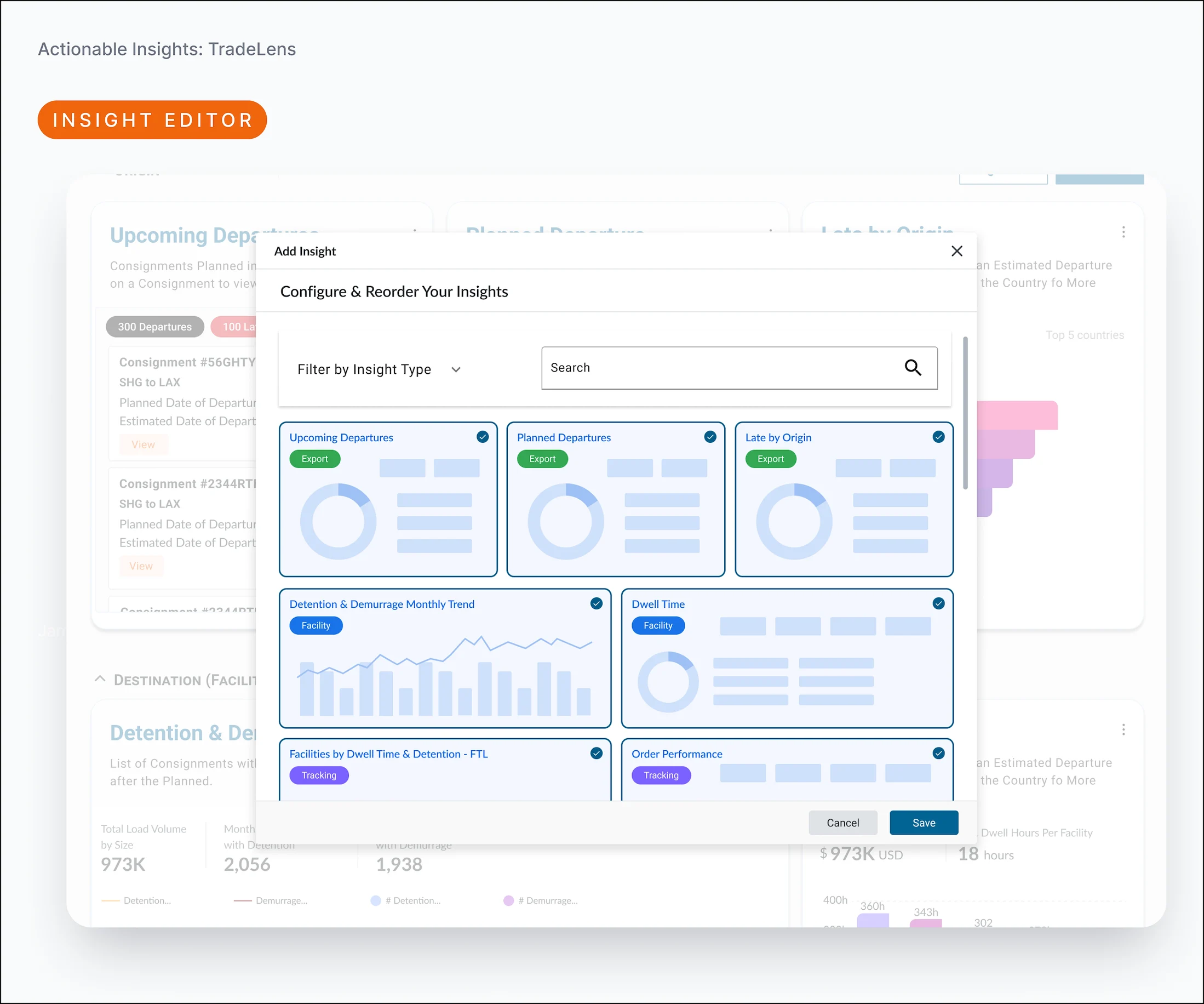
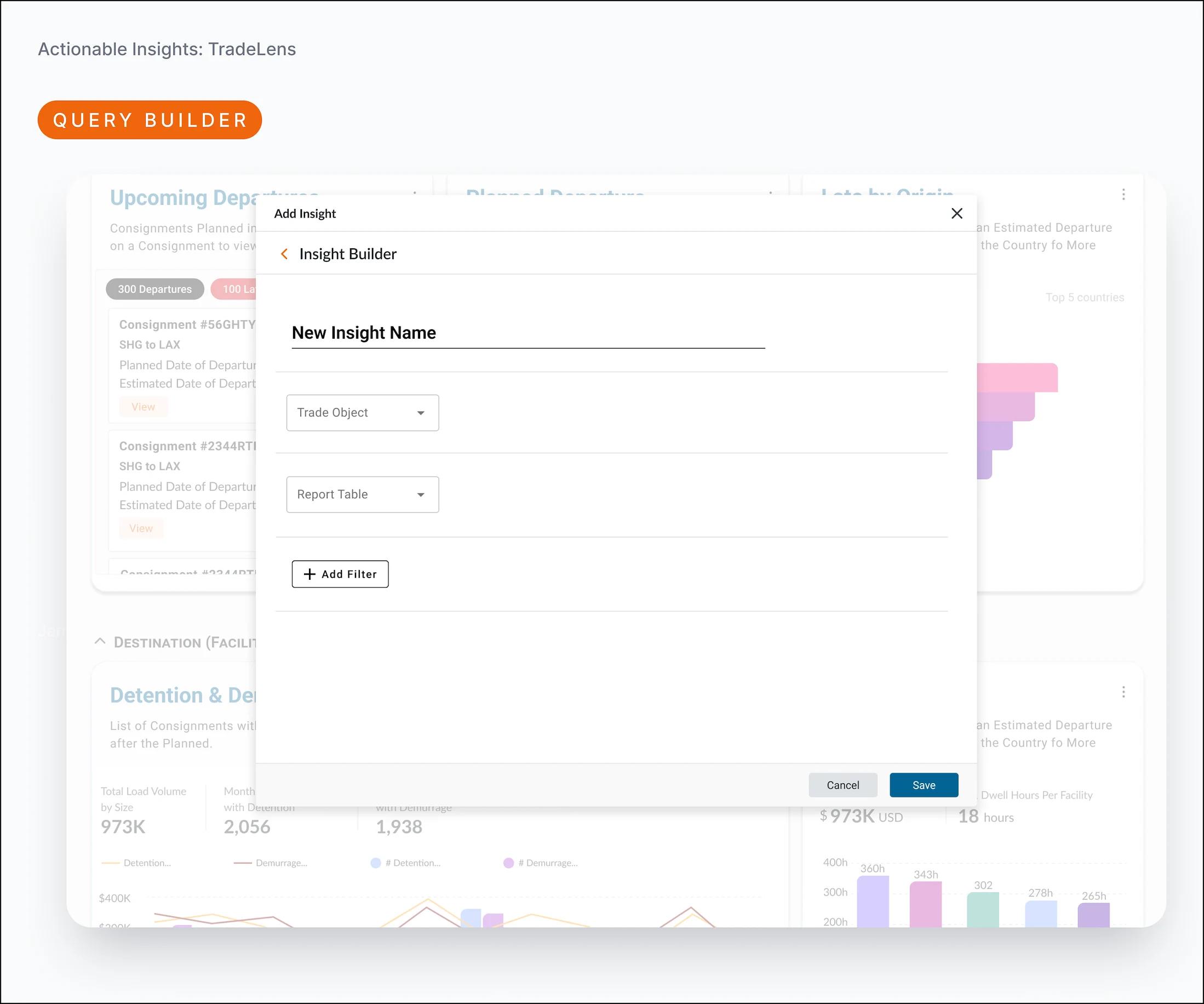
I led discovery across IBM, Maersk, and enterprise customers to align on business goals, technical constraints, and success metrics before any design work began. Research revealed three consistent needs: faster access to operational insights, reusable reporting workflows, and self-service data exports. Rather than redesigning existing dashboards, I proposed a modular reporting framework built around role-specific views, customizable query building, and reusable visualization components. We validated the model through iterative usability testing, using SUS benchmarks to measure improvements in comprehension and confidence throughout development.


40% Reduction in manual reporting time.
25% → 85% Growth in self-service exports within two quarters.
38% Increase in daily active users after launch.
64 → 72 Improvement in SUS score following usability iterations.